The HillDT Non-Surgical Spinal Decompression Table
Learn why the HillDT non-surgical spinal decompression table is one of the most advanced FDA-cleared decompression technologies used for disc-related back pain, neck pain, sciatica, and nerve pressure.
The HillDT Non-Surgical Spinal Decompression Table
When patients are dealing with herniated discs, bulging discs, sciatica, degenerative disc disease, chronic back pain, neck pain, numbness, tingling, or nerve pressure, one of the most important questions becomes:
“What kind of technology is being used to help my spine?”
That question matters.
Not all decompression tables are the same. Not all traction is the same. Not all spinal care technology is equally precise, comfortable, or sophisticated.
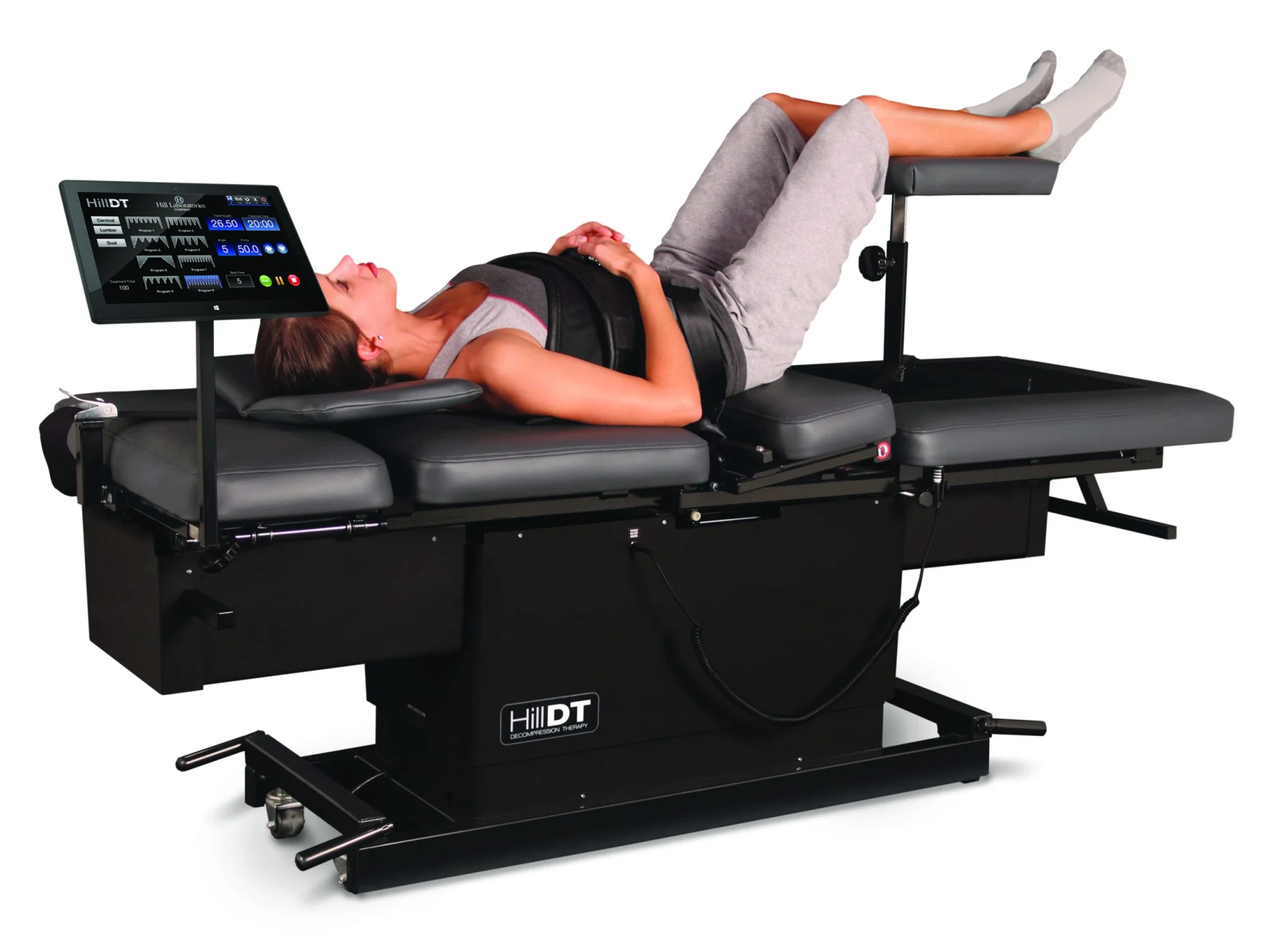
At New York Chiropractic Life Center and Disc Center NYC, we use the HillDT non-surgical spinal decompression table because it is one of the most advanced, sophisticated, and patient-centered decompression systems available. HillDT Solutions describes spinal decompression as an FDA-cleared therapy, and describes the HillDT table as using sophisticated load sensor technology to constantly measure treatment force and patient resistance during care.
We want to be honest: no table guarantees results for every patient. But for the right patient, with the right diagnosis, the right protocol, and the right clinical guidance, the HillDT table may help create a powerful non-surgical option for disc and nerve-related spinal problems.
Quick Answer
The HillDT non-surgical spinal decompression table is an advanced FDA-cleared decompression system designed to gently reduce pressure on spinal discs and nerves. Unlike basic traction or older cable-based systems, HillDT uses sophisticated load sensor technology that monitors treatment force and patient resistance. HillDT states that the system senses the patient’s approaching threshold and reduces the pull, allowing low-force, smooth decompression. This is important because less muscle guarding may make treatment more comfortable and effective for appropriate disc and nerve cases.
Why the Table Matters
Spinal decompression is not just about pulling on the spine.
If it were that simple, every traction device, inversion table, and hanging bar would produce the same results.
They do not.
The spine is complex. The discs, joints, muscles, ligaments, nerves, and nervous system all respond differently depending on the type of force applied.
If the pull is too aggressive, the body may guard.
If the angle is wrong, the wrong area may be stressed.
If the patient is tense, the spine may not unload effectively.
That is why technology matters.
HillDT was designed to make decompression more controlled, more comfortable, and more adaptable to the patient.
What Makes HillDT Different
HillDT Solutions states that the HillDT table constantly measures and monitors treatment force and patient resistance. It also states that, at a rate of more than 10,000 pulses per millimeter, the table senses the patient’s approaching threshold and reduces the pull, allowing low-force, smooth decompression in a different class from cable-based systems.
That is a major distinction.
Many patients with disc problems have muscle guarding. Their body is trying to protect the injured area. If a table simply pulls harder, the body may resist harder.
HillDT’s design is built around the idea that smarter decompression is better than forceful decompression.
The goal is not to overpower the body.
The goal is to gently unload the spine in a way the nervous system can tolerate.
Lumbar Decompression for Lower Back Disc Problems
Lower back disc problems can be life-changing.
A lumbar herniated disc, bulging disc, or degenerative disc can irritate nerves and create lower back pain, sciatica, hip pain, numbness, tingling, burning, or pain traveling down the leg.
HillDT’s lumbar decompression setup is designed for comfort and targeting. The company states that lumbar positioning can happen in less than 30 seconds, and that the table includes power elevation, pelvic Flexi-Straps, an adjustable flexion stool, a head pillow, and a thoracic harness to help secure and position the patient. HillDT also states that the pelvic tilt system and eight treatment protocols create calculable, repeatable opportunities to direct force to the disc being targeted.
For patients, this matters because lower back decompression should not feel random.
It should feel controlled, specific, and comfortable.
Cervical Decompression for Neck Problems
Neck problems can be just as disruptive as lower back problems.
Cervical disc issues may create neck pain, headaches, shoulder pain, numbness, tingling, arm pain, or hand symptoms.
HillDT’s cervical decompression system is designed with comfort and safety in mind. HillDT describes a cervical device that cradles the head with complete encapsulation of the occiput. The cervical support is adjustable, cushioned, and contoured. HillDT also notes that the cervical cushion can tilt to target lower cervical discs and help reduce pressure in certain posterior disc regions.
This is one of the reasons we value the HillDT system. It is not only a lower back decompression table. It also gives us options for appropriate neck-related disc and nerve cases.
Software, Touchscreen, and Treatment Control
The HillDT table is not just mechanical. It is software-driven.
HillDT describes the table’s custom software as allowing control over table height, treatment program, pelvic or cervical angle, decompression force, and treatment time. It also includes single or dual treatment options, preset treatment programs, real-time streaming data, patient database and treatment history, a patient safety switch, audio signal, and remote updating and troubleshooting.
For patients, that means care can be more organized, repeatable, and trackable.
For doctors, it means there are more ways to customize care based on the patient’s presentation and response.
This is part of what makes the HillDT table one of the most sophisticated decompression systems on the market.
Why Less Muscle Guarding Matters
Muscle guarding is one of the biggest challenges in spinal decompression.
When the body senses danger, pain, or too much force, muscles tighten to protect the spine.
That protection can be useful in an emergency.
But during decompression, excessive guarding can interfere with the goal of unloading the spine.
HillDT states that its technology can mean better outcomes because the patient experiences far less muscle guarding than with other designs, and that in most cases patients can leave the table within seconds with very little soreness to follow.
This is important because the best decompression experience should not feel like a battle between the machine and your body.
It should feel controlled, comfortable, and strategic.
Research and Results
We should be honest about results.
No decompression table guarantees that every patient will improve.
But the clinical outcomes summarized through Disc Center NYC are encouraging for properly selected patients. Disc Center NYC reports that spinal decompression is supported by research and clinical evidence, including MRI studies showing disc rehydration and retraction after decompression protocols, clinical trials showing high success rates in reducing disc-related pain and improving function, and neurosurgical research confirming decompression’s role as a viable alternative to surgery for many disc conditions.
Disc Center NYC also summarizes clinical outcomes showing that 92% of patients reported improvement, with average pain decreasing from 4.1 to 1.2 on a 0 to 5 scale.
Those results do not mean everyone is a candidate.
They do mean that non-surgical decompression may be a meaningful option for the right disc-related case.
Patient Story: Lower Back Disc Problem
A lower back disc patient may come in with pain that travels from the low back into the hip, glute, leg, or foot. They may have trouble sitting, driving, bending, sleeping, or walking without pain.
A typical patient may say:
“I thought my back pain was just something I had to live with. Sitting at work was miserable, and the pain down my leg made me nervous. After being evaluated and starting decompression care, I began to feel less pressure, more mobility, and more confidence moving again. It was the first time I felt like there was a real non-surgical plan.”
This type of testimonial should be understood as an example of what some patients report, not a guarantee. Results vary based on diagnosis, severity, consistency, and individual health factors.
Patient Story: Neck and Arm Symptoms
A neck-related disc patient may experience neck pain, headaches, shoulder blade pain, arm pain, numbness, tingling, or hand symptoms.
A typical patient may say:
“My neck felt locked up for months, and I was getting tingling into my arm. I was nervous about my options. The decompression table was much gentler than I expected. Over time, I felt less tension, less nerve irritation, and I could work at my computer with more comfort.”
Again, this is a representative patient experience, not a promise. But it reflects why cervical decompression technology can be so valuable for the right patient.
Who May Be a Candidate
HillDT decompression may be appropriate for certain patients with herniated discs, bulging discs, degenerative disc disease, sciatica, pinched nerves, chronic back pain, chronic neck pain, or pain traveling into the arms or legs.
But candidacy matters.
Disc Center NYC notes that doctors determine candidacy through a thorough exam, X-rays if necessary, and MRI review, and states that MRI is the gold standard for evaluating spinal disc injuries and creating a tailored care plan.
This is the responsible way to approach decompression.
The goal is not to put everyone on the table.
The goal is to determine who is likely to benefit and who needs a different kind of care.
Final Thoughts
The HillDT non-surgical spinal decompression table is one of the most advanced and sophisticated decompression systems available today.
It is FDA-cleared, software-driven, adjustable, and designed with load sensor technology that monitors treatment force and patient resistance. Its lumbar and cervical features allow for targeted, comfortable care for appropriate back and neck disc cases.
But the table is only part of the equation.
The real power comes from matching advanced technology with proper diagnosis, clinical judgment, patient consistency, and a complete spinal health plan.
At New York Chiropractic Life Center and Disc Center NYC, Drs. Jay and Josh Handt, DC help New Yorkers explore natural, non-surgical options for disc-related back pain, neck pain, sciatica, numbness, tingling, and nerve pressure.
If you want to find out whether the HillDT non-surgical spinal decompression table may be right for your condition, call 212-580-3350 or visit www.NewYorkChiropractic.com to schedule your consultation.
FAQ Section
What is the HillDT spinal decompression table?
The HillDT table is an advanced non-surgical spinal decompression table designed to gently unload the spine using controlled, software-guided decompression technology.
Is HillDT spinal decompression FDA-cleared?
HillDT Solutions describes spinal decompression as an FDA-cleared therapy.
What makes HillDT different from basic traction?
HillDT uses load sensor technology to monitor treatment force and patient resistance. HillDT states the system senses the patient’s approaching threshold and reduces the pull, allowing smooth, low-force decompression.
Can HillDT help lower back disc problems?
HillDT may help properly selected patients with lumbar disc problems such as herniated discs, bulging discs, degenerative disc disease, and sciatica. A proper evaluation is necessary.
Can HillDT help neck problems?
HillDT includes cervical decompression features designed to support the head and adjust targeting for appropriate neck-related disc and nerve cases.
Does spinal decompression work for everyone?
No. Results vary, and not everyone is a candidate. A thorough exam and, when appropriate, imaging review are important before beginning care.