Spinal Decompression for Disc Pain and Sciatica
Spinal decompression is a non-surgical approach designed to gently reduce pressure on injured spinal discs and irritated nerves. For the right person, it can be a meaningful part of getting past sciatica, disc pain, and the fear that every bend, walk, or workout will make things worse.
At New York Chiropractic Life Center on the Upper West Side of New York City, we meet people every week who have reached that point. They are still working, parenting, training, traveling, or caring for a spouse, but their back or neck has become the limiting factor. They do not want their life organized around medication, repeated procedures, or avoiding everything they enjoy.
What is non-surgical spinal decompression?
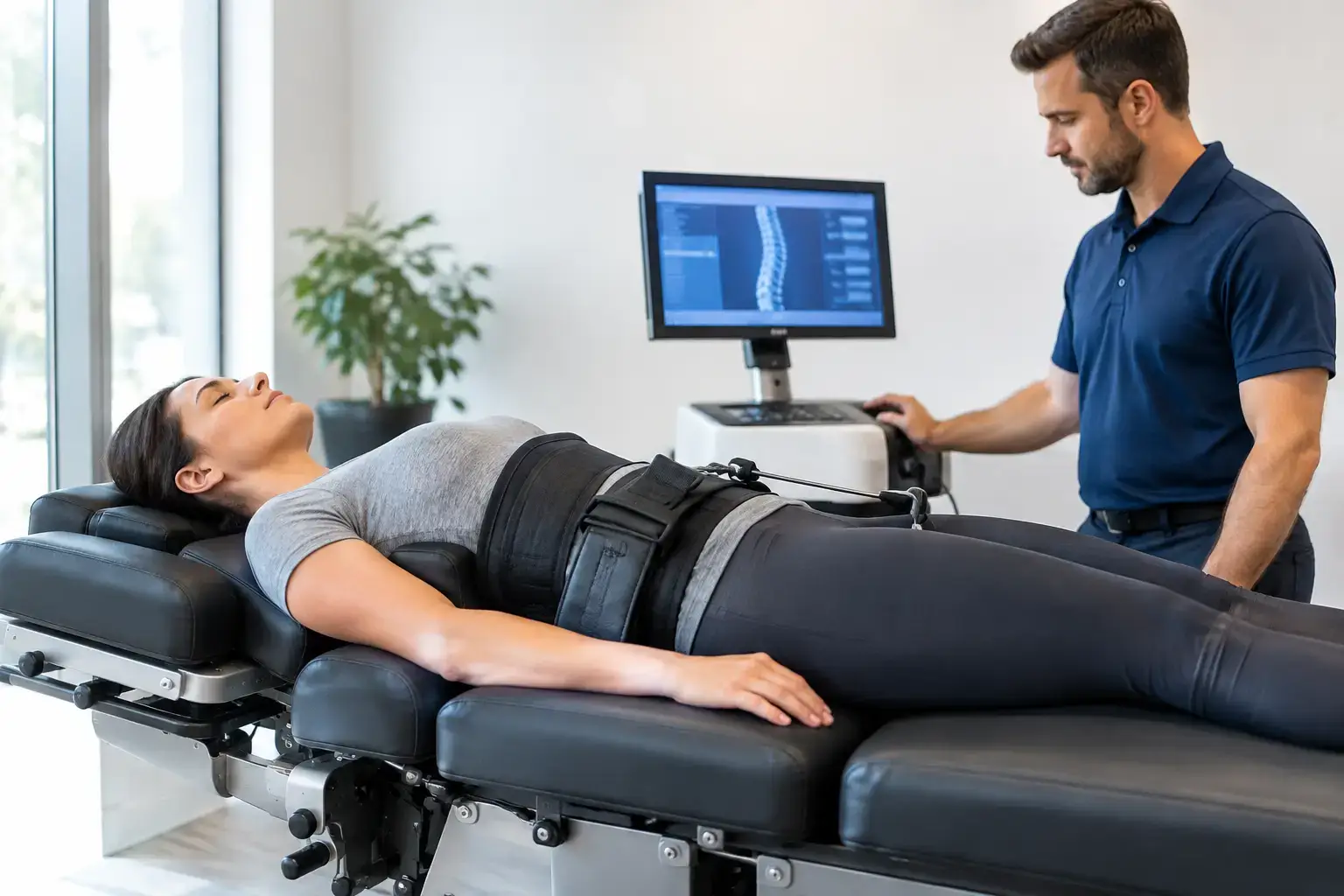
Non-surgical spinal decompression uses a computerized treatment table to apply controlled, gentle traction to the spine. The goal is not simply to stretch the back. It is to create a small, carefully managed change in pressure within a spinal segment so a disc and the surrounding nerve structures have a better environment to recover.
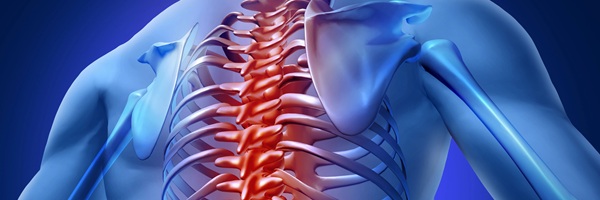
A spinal disc is the cushion between the bones of the spine. When a disc bulges, herniates, degenerates, or becomes inflamed, it can irritate a nearby nerve. In the low back, that irritation may travel into the buttock, leg, calf, or foot and is often called sciatica. In the neck, it may create pain, tingling, numbness, or weakness into the shoulder, arm, or hand.
Decompression is usually delivered in a series of sessions as part of a broader care plan. At our Upper West Side practice, it is often paired with corrective chiropractic care, movement guidance, and a clear plan for restoring daily function. The machine is not the whole answer. The assessment, the clinical judgment, and the plan around it matter just as much.
How does spinal decompression feel?
Most people describe spinal decompression as a gentle pulling and releasing sensation. It should not feel like aggressive force. You remain clothed and are secured comfortably on the table while the treatment follows a programmed pattern of light tension and relaxation.
Some patients notice relief during the first few visits. Others improve more gradually as irritation settles and they begin moving with less guarding. A temporary increase in soreness can happen, particularly when a painful area has been stiff and protected for a long time. We monitor symptoms closely and adjust care based on how your body responds.
This is not passive care in the sense of lying on a table and hoping for a different life. The best results tend to come when treatment is combined with smarter movement, better mechanics, consistent walking or exercise as tolerated, and a commitment to rebuilding capacity.
Does spinal decompression work for sciatica?
Spinal decompression can be helpful for sciatica when the symptoms are related to disc pressure or nerve irritation and the patient is an appropriate candidate. It is not a universal treatment for every type of leg pain. Hip problems, peripheral nerve issues, spinal stenosis, joint irritation, and other conditions can produce symptoms that feel similar to sciatica.
That distinction is why a careful examination matters. Dr. Josh Handt, DC, CFNMP, and Dr. Jay Handt look at the pattern of symptoms, movement limitations, neurological findings, health history, and any relevant imaging before recommending a course of care. We want to know what is actually driving the problem, not just where it hurts.
Consider a typical pattern we see in New York City: an active retiree develops pain after lifting luggage, then begins avoiding long walks through the neighborhood because pain shoots down one leg. Or a runner trains through recurring low-back tightness until a hill workout triggers pain into the glute and calf. These are not identical cases, and neither should receive a one-size-fits-all plan. But when disc involvement and nerve irritation are part of the picture, non-surgical spinal decompression may offer a reasonable, drug-free option.
Who may be a candidate for spinal decompression?
People commonly seek decompression for herniated or bulging discs, recurring sciatica, degenerative disc changes, persistent neck or low-back pain, and pain that travels into an arm or leg. It may also be considered when someone has tried rest, medication, or general exercise without returning to normal function.
The question is not whether you have a dramatic MRI label. Many people have disc changes on imaging and no symptoms at all. The more useful question is whether your symptoms, examination findings, and functional limits point to a disc and nerve problem that may respond to this kind of care.
There are situations where decompression is not the right choice or needs to be modified. Recent fracture, certain spinal surgeries, severe osteoporosis, infection, cancer, significant instability, or pregnancy can change the plan. Progressive weakness, loss of bowel or bladder control, or numbness in the groin area requires urgent medical evaluation rather than waiting for conservative care.
Good care is not about fitting every patient onto one machine. It is about knowing when to use a tool, when to choose a different approach, and when to refer for additional medical evaluation.
Why corrective chiropractic care matters alongside decompression
A painful disc is rarely just a disc problem. When pain persists, people often change how they sit, stand, walk, lift, and breathe. Their body becomes protective. Muscles tighten, movement becomes less confident, and the nervous system stays on alert.
Corrective chiropractic care addresses the way the spine and nervous system are functioning around the injury. Decompression may reduce the pressure and irritation that keep symptoms active, while chiropractic care can help restore motion and improve how the spine handles load. Massage therapy may also be appropriate for muscle tension that has developed around the problem.
For athletes, this matters even more. A runner may be able to jog without sharp pain but still lack hip motion, trunk control, or confidence on hills. A golfer may swing around a stiff low back until the next round creates another flare-up. Our goal is not simply to get you through a pain spike. It is to help you build a body that can handle the life and activities you want over the next several decades.
That is the practical meaning of the 100 Year Lifestyle. Staying strong, mobile, and independent is not a biohacking project. It is the result of addressing problems early, moving consistently, and giving the spine the attention it deserves.
What happens during an evaluation for disc pain?
Before recommending spinal decompression at New York Chiropractic Life Center, we start with a comprehensive assessment. We listen carefully to how your symptoms began, what aggravates or relieves them, and what activities you have had to stop or modify. Then we evaluate posture, spinal movement, strength, reflexes, sensation, and other neurological signs as appropriate.
If imaging is relevant, we consider it in context. An image can show anatomy, but it does not replace a conversation or a physical examination. A small disc bulge can be very painful in one person and completely silent in another.
From there, we explain what we think is happening in plain language. If decompression is appropriate, we outline the purpose of care, what progress would look like, and what you can do between visits. If it is not appropriate, we tell you that clearly. Our practice has cared for more than 50,000 patients over 65+ years, and that experience has taught us that honest recommendations create better decisions.
How long does spinal decompression take to work?
There is no responsible single answer. Some people feel a change in leg pain, mobility, or sleep early in care. Others need time because their symptoms have been present for months or years, or because work demands, stress, poor sleep, and reduced conditioning are keeping the nervous system reactive.
Progress should be measured beyond a pain score. Can you sit through a meeting without shifting constantly? Walk around Central Park with less fear? Put on your shoes more easily? Return to a short run, a tennis lesson, or a full night of sleep? Those functional markers often tell the real story.
The people who do best generally stay engaged. They communicate changes in symptoms, follow their movement plan, and do not rush back to their most demanding activity the moment pain eases. Recovery is not about proving toughness. It is about giving tissues and the nervous system a chance to adapt.
Frequently asked questions about spinal decompression
Is spinal decompression painful?
It should be comfortable and controlled. You may feel gentle traction, but treatment should not reproduce sharp or worsening nerve pain. Tell your doctor what you feel so the settings and approach can be adjusted.
Can spinal decompression fix a herniated disc?
No treatment can promise to “fix” every disc injury. The aim is to reduce pressure and irritation, improve function, and support the body’s ability to recover. Some people improve substantially without surgery; others need additional medical options.
Can I exercise while receiving decompression care?
Often, yes, but the right activity depends on your condition. Walking and specific mobility or stability work may be useful, while heavy lifting, hard intervals, or long runs may need to be temporarily scaled back.
Is spinal decompression only for low-back pain?
No. Depending on the evaluation and the equipment used, decompression may be considered for certain neck-related disc and nerve symptoms as well. The diagnosis and examination guide the recommendation.
Pain can make your world smaller long before you realize it. The right plan should help you expand it again, one confident movement at a time. Book Your Spinal Blueprint Assessment.