Family Wellness Chiropractor NYC for Every Age
A family wellness chiropractor in NYC should help each person move, adapt, and stay active through every stage of life, not simply wait for pain to become disruptive. At New York Chiropractic Life Center on the Upper West Side, we provide drug-free, non-surgical spine and nervous system care for children, parents, athletes, and active retirees.
For more than 65 years, our practice has cared for over 50,000 patients in New York City. Dr. Jay Handt founded the original practice, and Dr. Josh Handt, DC, CFNMP, continues that work with a focus on the 100 Year Lifestyle: helping people build the strength, mobility, and independence to enjoy the decades ahead.
What does a family wellness chiropractor in NYC do?
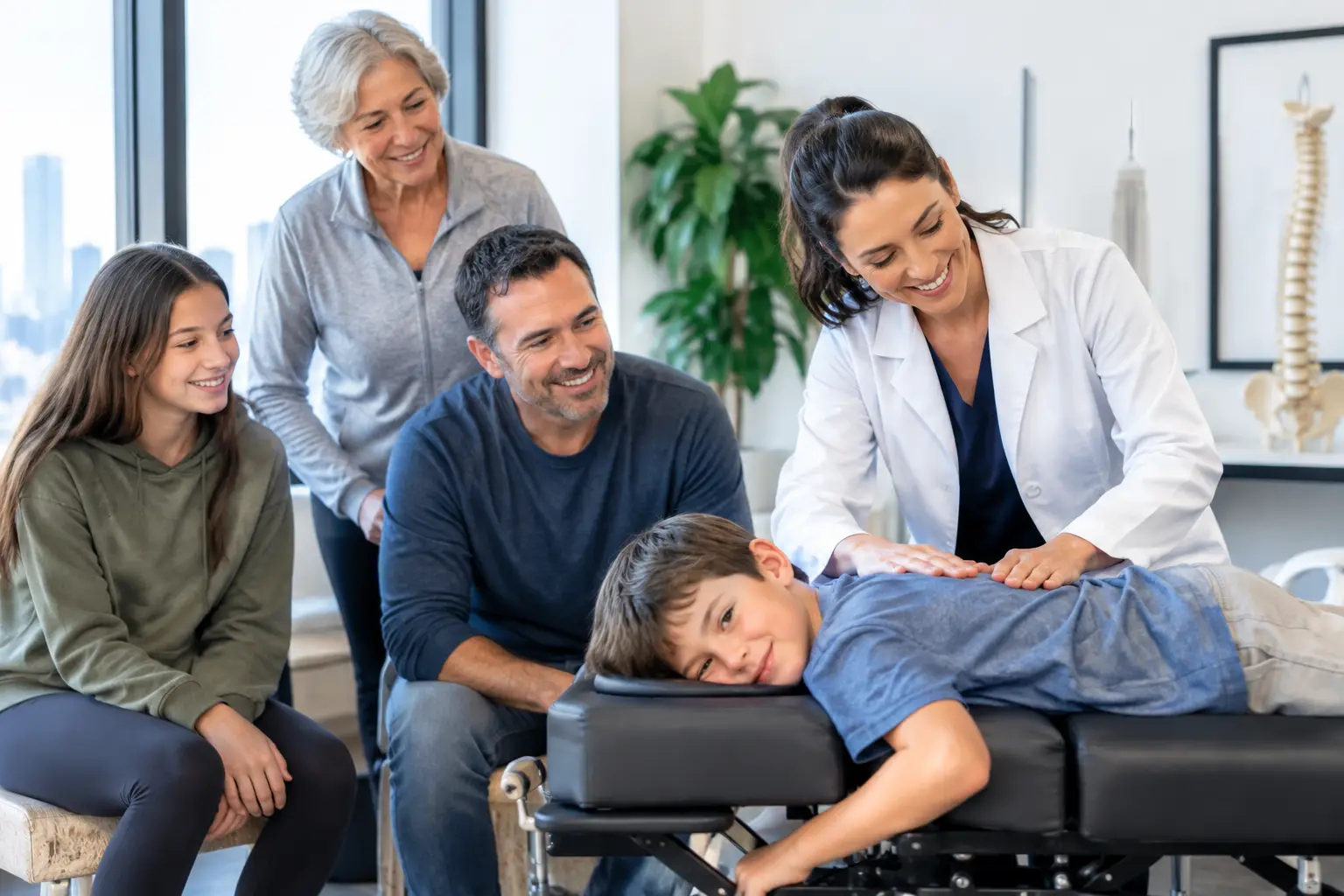
Family wellness care looks at how the spine and nervous system support the way your household lives. A child may be learning to move, carry a backpack, or play a first sport. A parent may be balancing work, parenting, poor sleep, and long hours at a desk. A grandparent may be determined to keep walking Central Park, traveling, and getting down on the floor with grandchildren.
Those needs are different, but the foundation is similar. The spine needs to move well, the body needs to handle daily stress, and small changes in function should be addressed before they become larger limitations.
Wellness chiropractic is not about chasing a new gadget, a complicated supplement stack, or a temporary shortcut. It is about paying attention to the basics that hold up over time: posture, movement, spinal function, recovery, strength, and nervous system health. That approach is particularly useful in New York City, where walking, commuting, screens, stress, and packed schedules can quietly add up.
At New York Chiropractic Life Center on the Upper West Side, we start by learning what active life means to you. For one patient, that may mean returning to weekend tennis. For another, it may mean carrying a toddler without neck pain, training for a half marathon, or remaining independent after retirement.
Why is whole-family care different from pain-only care?
Pain matters. It can interrupt sleep, make a subway ride miserable, and cause people to stop doing the activities that make them feel like themselves. But pain is often the last signal, not the first sign, that the body is under strain.
A pain-only approach may focus on getting through this week. Whole-family wellness care asks a longer question: what patterns could limit this person next year, or ten years from now? The answer is not always a chiropractic adjustment. Sometimes the right next step is changing training volume, improving work setup, building recovery into the week, or seeking medical evaluation when a condition calls for it.
That distinction matters. Good care should never promise that every problem has one answer. Disc injuries, arthritis, scoliosis, sports injuries, pregnancy-related discomfort, and childhood development all require individual consideration. Our job is to assess carefully, explain what we see in plain language, and recommend care that fits the person in front of us.
How can chiropractic care support active parents and retirees?
The people we see on the Upper West Side are rarely looking to become less active. They want to keep doing what they love with greater confidence. Many have already tried resting, stretching at home, or pushing through pain until their back, neck, or leg symptoms began changing their routine.
For an active adult with recurring low back pain, corrective chiropractic care can focus on spinal movement and the patterns that repeatedly load irritated areas. For someone with radiating leg pain or a diagnosed bulging or herniated disc, non-surgical spinal decompression may be considered as part of a personalized plan.
What is non-surgical spinal decompression?
Non-surgical spinal decompression is a controlled form of traction designed to gently change pressure within spinal discs. At New York Chiropractic Life Center in New York City, it is a flagship service for appropriate patients with herniated discs, bulging discs, and sciatica.
It is not the same as a quick stretch, and it is not right for every back problem. A careful assessment helps determine whether decompression may fit a patient’s condition, health history, and goals. Some people need decompression alongside corrective chiropractic care and specific movement guidance. Others may need a different approach or referral.
We have seen a familiar pattern over decades of practice: a person stops running, golf, travel, or even longer walks because they fear a flare-up. Progress begins when they understand their condition, follow a consistent plan, and rebuild trust in movement at a sensible pace. That is more meaningful than simply trying to mask symptoms long enough to get through the day.
Is family chiropractic appropriate for children?
Pediatric chiropractic care from birth is designed to be gentle and age-appropriate. Children are not small adults, and their care should reflect their stage of development, activity level, and health history.
Parents often bring a child in because they notice posture changes, frequent complaints after sports, tension from heavy backpacks, or simply want their child’s spinal development evaluated. We listen carefully, examine appropriately, and communicate clearly with parents about what we find and what we recommend.
For young athletes, the conversation often includes more than the spine. A growing child who plays soccer, gymnastics, baseball, or competitive tennis may need help managing training load, recovery, and movement habits. The goal is not to create fear around activity. It is to support healthy movement and help families recognize when discomfort deserves attention.
What about runners and weekend athletes?
New York City gives runners plenty of reasons to train, from Central Park loops to Hudson River Greenway miles. It also gives them plenty of ways to overdo it. A small change in hip motion, stride mechanics, spinal mobility, or recovery can show up as recurring tightness, back pain, or a training plateau.
Sports and athlete performance care at our Upper West Side practice is built for runners, golfers, tennis players, pickleball players, and people who want to keep competing on their own terms. We look at the demands of the sport, the patient’s history, and the gap between what their body can currently tolerate and what they want it to do.
A runner who develops low back pain at mile six does not necessarily need to stop running forever. It depends on the source of the pain, the presence of neurological symptoms, training errors, and overall spinal function. A thoughtful plan may include chiropractic care, changes to training volume, mobility work, and a gradual return to distance.
Massage therapy can also be useful for patients who carry persistent muscle tension or need support for recovery as part of a broader care plan. It should complement, not replace, an evaluation of why the same problem keeps returning.
What should a first family wellness visit include?
A meaningful first visit should be more than a brief conversation followed by generic treatment. At New York Chiropractic Life Center, we want to understand your health history, daily demands, activity goals, prior injuries, and the specific changes that brought you in.
We then assess the spine and nervous system, movement, and other relevant findings. When imaging or another evaluation is appropriate, we discuss that directly. The purpose is to create a clear picture of where you are now and what may help you move forward.
This is especially valuable for families because needs can change quickly. The parent who came in for neck pain may later need support returning to exercise. The runner may develop a disc issue after a long training cycle. The active retiree may want a proactive plan that helps preserve mobility. Care should evolve with real life.
Frequently asked questions about family wellness chiropractic in NYC
Can chiropractic care help with sciatica?
Sciatica describes symptoms that can include pain, tingling, numbness, or weakness traveling into the leg. The cause varies, often involving irritation of a nerve root in the low back. Chiropractic care and non-surgical spinal decompression may help appropriate patients, but an examination is needed to determine the best next step.
Do I need to be in pain to see a chiropractor?
No. Many people seek wellness care because they want to maintain mobility, improve how they move, or address recurring stiffness before it becomes more limiting. However, if you have severe pain, progressive weakness, loss of bowel or bladder control, or other urgent symptoms, seek immediate medical attention.
Can different family members have different care plans?
Yes. A useful family practice does not apply the same plan to every person. A child, a marathon trainee, a desk-working parent, and an active retiree should be assessed and cared for according to their own needs and goals.
How long does it take to see progress?
It depends on the condition, how long it has been present, the demands on the body, and how consistently a patient follows the plan. Some people notice changes quickly, while long-standing movement or disc-related problems often require more patience and a measured progression.
The best family wellness plan is one that helps you keep participating in your life, whether that means school pickups, a long walk through the neighborhood, a race day, or a future you can still move through independently. If you are ready to understand what your spine and nervous system need, Book Your Spinal Blueprint Assessment.