The Real Reasons Sciatica Returns (and How to Prevent It)
By Dr. Jay Handt, DC, Founder of NYCLC, 45+ Years Sports & Family Chiropractic, 100 Year Lifestyle Certified; and Dr. Josh Handt, DC, Chiropractor, 20+ Years Performance & Family Chiropractic, 100 Year Lifestyle Certified, National Spinal Decompression Certified, National Neuropathy and Decompression Certification, Webster Technique Certified, Jackson Craio-Cervical Technique Certified.
Have you ever celebrated the relief of sciatica fading – only to be blindsided weeks later by that familiar jolt of pain, tingling, or weakness down your leg? If so, you’re not alone. For millions, sciatica is a recurring battle. The good news: repeated episodes are almost never “just bad luck” or aging – they’re a sign of underlying issues you can address for lasting relief.
This article will explain why sciatica keeps coming back, why symptom-chasing fails, and how modern chiropractic care, decompression, and rehab offer real hope for ending the pain cycle – so you can move freely and live fully again.
What You’ll Discover
- The hidden causes of recurring sciatica (hint: it’s rarely just one muscle or disc)
- How imaging can miss the real reasons nerves keep flaring
- Why common treatments give only temporary relief
- What the American Chiropractic Association and NIH/NINDS recommend for long-term healing
- Proven, step-by-step strategies to end relapses and regain confidence
- A real-world case of recovery
What is Sciatica, Really?
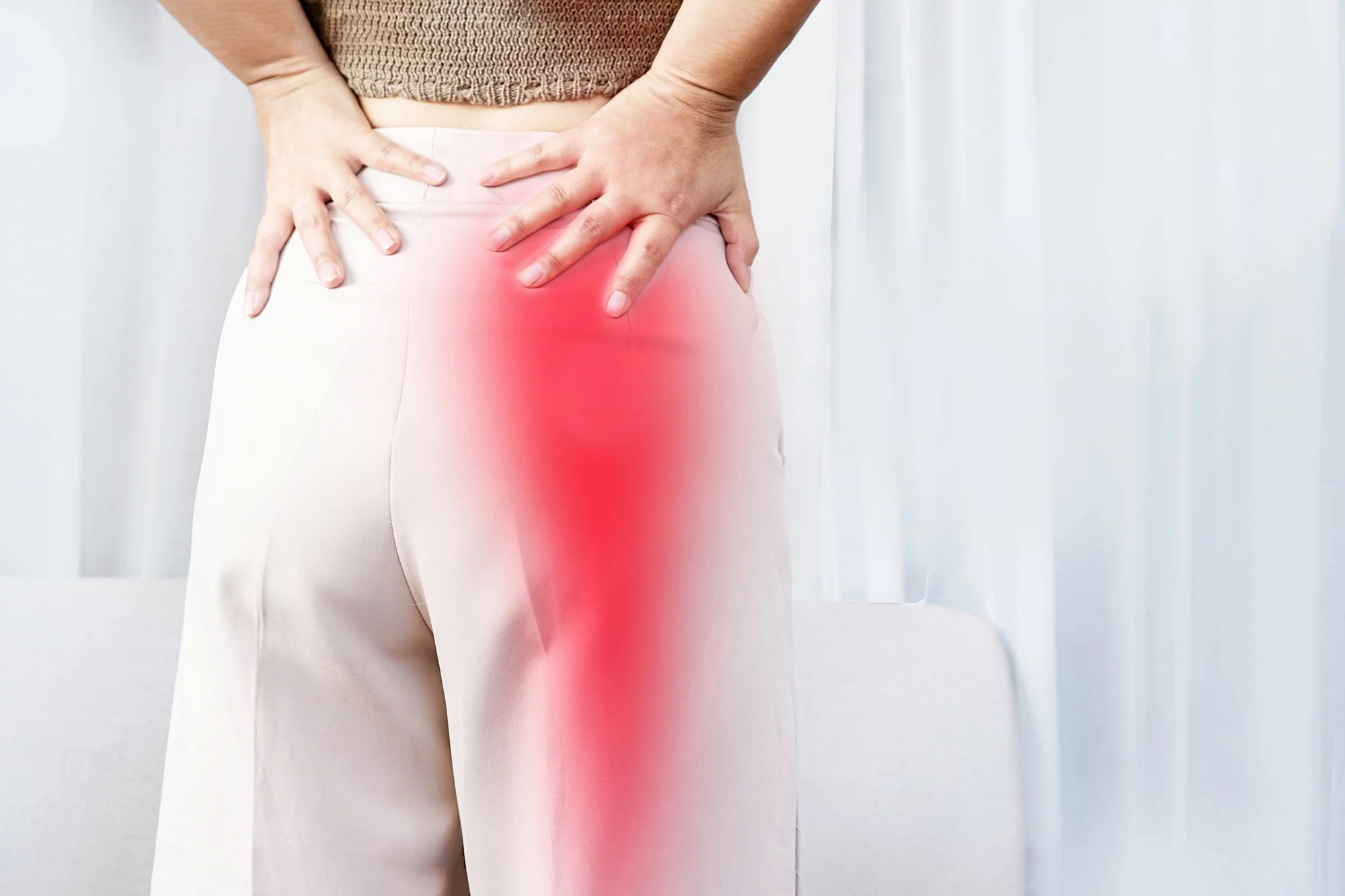
Sciatica is not a condition, but a collection of symptoms caused by irritation or compression of the sciatic nerve, which runs from your lower back through your hip and down the leg. Classic symptoms include:
- Sharp, burning, or radiating pain
- Tingling, numbness, or “pins-and-needles” in the leg or foot
- Weakness or difficulty standing/walking
- Occasional loss of balance or coordination
Most often, sciatica starts with a problem in the lumbar spine – like a herniated disc, bony spur, or joint misalignment. However, the nerve can also become hypersensitive over time, making it more likely to reactivate with minor triggers.
Case Vignette: Breaking the Cycle – Samantha’s Story
Samantha, 39, first got sciatica after lifting a heavy box at work. With rest, ice, and stretching, the pain disappeared…for a while. But after a few months and a stressful workweek, she felt a familiar twinge. Soon, she was back to limping, struggling to sit, and anxious that the pain would never fully go away.
Frustrated after “normal” MRI results and prescriptions for painkillers, Samantha tried a new approach: an integrated program of gentle chiropractic adjustments, non-surgical decompression therapy, and personalized corrective exercise. Within weeks, her pain was gone – but more importantly, she learned what caused her flare-ups and how to prevent them. Today, she confidently hikes, travels, and works, free from the fear of her next episode.
Why Does Sciatica Keep Coming Back?
1. Treating Symptoms, Not the Root Cause
Most people reach for medication, heat packs, or stretches. These may mask pain, but if nerve compression, joint restrictions, or muscle/fascial imbalance persist, recurrence is almost certain (see NIH/NINDS guidance on back pain).
2. “Partial Healing”: Stopping Care Too Soon
It’s normal to stop therapy once pain fades. But nerves heal slowly, and underlying dysfunctions (like poor movement patterns or weak stabilizer muscles) often remain. If those aren’t addressed, the cycle repeats.
3. Movement and Lifestyle Triggers
Long commutes, poor ergonomics, unbalanced workouts, or “weekend warrior” activity can aggravate a sensitized nerve. Without a plan to fix posture and daily movement, minor incidents set off major pain.
4. Underlying Mechanical Problems
Many cases involve hidden pelvic misalignments, hip weakness, or subtle spinal restrictions – problems that don’t always show up on basic tests or imaging but are obvious to a chiropractic clinician trained in movement analysis.
5. Missing the Nerve’s “Sensitization”
Once sciatica strikes, your nervous system becomes more reactive. Until both mechanical causes and nerve sensitivity are calmed, the risk of recurrence is high.
Why MRI and Imaging Often Miss the Bigger Picture
Research shows that MRI findings (like small bulges or degenerative changes) do not always correlate with pain or risk of recurrence (American Chiropractic Association: Imaging and Low Back Pain). Many people with “normal” MRIs suffer repeated sciatica, while others with “worse” images feel fine.
That’s why a hands-on, functional assessment – checking movement, posture, stability, and real-life activities – is essential. Relying on scans alone often misses the core problems.
The Power of Modern Chiropractic and Integrative Care
At New York Chiropractic Life Center / Disc Centers of America NYC, our approach is comprehensive:
- Thorough evaluation: We assess not just images but how you sit, move, stand, and lift
- Gentle, targeted spinal adjustments: Restore alignment, relieve pressure on nerves, and improve joint function
- Non-surgical decompression: Specialized table-based therapy that gently relieves pressure on discs and nerves (details here)
- Personalized corrective exercise: Strengthens your core and hips to defend against future flare-ups
- Lifestyle coaching: Ergonomics, micro-breaks, and recovery tips for home, work, and play
This evidence-based method – endorsed by both the American Chiropractic Association and NIH – addresses immediate pain and, more importantly, eliminates the patterns that lead to sciatica’s return.
Action Steps for Lasting Sciatica Relief
- Complete Your Care Plan: Don’t abandon therapy when pain fades – see it through to stabilization.
- Move Often: Incorporate frequent walks, gentle stretches, and movement “snacks” into every day.
- Upgrade Your Ergonomics: Adjust your monitor and chair height, use lumbar support, and take standing or movement breaks.
- Build Core and Hip Strength: A stable kinetic chain reduces strain on your lower back for all activities.
- Rethink “Fitness”: Train functionally, not just for aesthetics – strong glutes and hips protect the spine.
- Schedule Ongoing Checkups: Chiropractic “tune-ups” help you stay ahead of small problems before they resurface.
Key Takeaways
- Recurrent sciatica isn’t fate or aging – it’s a fixable problem rooted in nerve and movement health.
- Conservative, hands-on care – not just passive treatments or medication – is proven for lasting relief.
- Solving the real triggers means you can move, work, and enjoy life fully – without endless pain cycles.
FAQs: Real Questions, Real Answers
- Can recurring sciatica be permanently resolved?
While every case is unique, most patients who stick with an evidence-based, comprehensive plan experience dramatic reductions in flare-ups – many stay pain-free for years. - If my MRI is normal, why do I keep getting pain?
Sciatica is often more about hidden mechanical or nervous system issues, not just scan findings. Functional assessment is key. - How quickly will I notice improvement?
Many patients report significant changes in the first 2–4 weeks of comprehensive care, but lasting results depend on complete follow-through. - What lifestyle habits matter most?
Core strength, daily activity, quality sleep, and smart ergonomics dramatically reduce recurrence. - When should I consider a second opinion or specialist?
Seek immediate care if you have sudden severe weakness, loss of bladder/bowel control, or rapidly worsening pain.
Ready to Move Freely, Live Fully?
You don’t have to accept recurrent sciatica as your new normal. If you’re ready to break the cycle, our team specializes in non-surgical correction and prevention – helping you rediscover the strength, mobility, and energy you deserve.
Schedule your personal assessment today – and let’s end the pain cycle for good.
Dr. Jay Handt, DC
Dr. Jay Handt is the founder and clinical director of New York Chiropractic Life Center and Disc Centers of America NYC. With over 45 years of experience, Dr. Handt has helped thousands of New Yorkers recover from pain, return to their active lives, and pursue athletic performance at every age. A 1978 graduate of New York Chiropractic College and certified in The 100 Year Lifestyle, Dr. Handt specializes in non-surgical spine care, decompression, and individualized programs for athletes, families, and adults looking for drug-free, evidence-based solutions.
Credentials & Affiliations
- Doctor of Chiropractic, New York Chiropractic College
- Founder, The New York Chiropractic Life Center
- Co-Director, Disc Centers of America NYC
- 100 Year Lifestyle Certified
- National Neuropathy and Decompression Certification
- Over 45 years in clinical practice
Dr. Josh Handt, DC
Dr. Josh Handt is a disc chiropractor and performance optimization chiropractor at New York Chiropractic Life Center and Disc Centers of America NYC. Over his 20+ year career, Dr. Handt has worked with competitive athletes, weekend warriors, and active adults – delivering measurable, research-based care that focuses on root-cause solutions and patient empowerment. He is a Cum Laude graduate of Palmer College of Chiropractic Florida, certified in The 100 Year Lifestyle, and recognized for his focus in sports performance and spinal decompression.
Credentials & Affiliations
- Doctor of Chiropractic, Palmer College of Chiropractic Florida
- Owner: The New York Chiropractic Life Center
- Co-Director, Disc Centers of America NYC
- 100 Year Lifestyle Certified
- Over 20 years in clinical practice
- National Spinal Decompression Certified
- National Neuropathy and Decompression Certification
- Webster Technique Certified
- Jackson Craio-Cervical Technique Certified
This article is for educational purposes only and is not a substitute for professional medical advice, diagnosis, or treatment. Chiropractic care results vary by individual. Always consult your healthcare provider about your specific condition, symptoms, or before beginning a new health program – especially if pain is severe, new, or accompanied by numbness, fever, or loss of function. If you have urgent or emergency symptoms, seek immediate medical care.