Is It Good to Decompress Your Spine by Hanging?
Is it good to decompress your spine by hanging? Learn the benefits, risks, limitations, and when professional chiropractic evaluation may be needed.
Is It Good to Decompress Your Spine by Hanging?
After a long day of sitting, commuting, working at a desk, scrolling on your phone, or carrying stress in your shoulders and lower back, hanging from a pull-up bar can feel like relief.
Your spine feels stretched.
Your shoulders open.
Your back may feel less compressed.
You may even feel taller for a few minutes.
That is why many people ask:
“Is it good to decompress your spine by hanging?”
At New York Chiropractic Life Center, we believe hanging can be a helpful tool for some people, but it is not a cure-all. It can support natural spinal decompression when done safely and appropriately, but it is not right for everyone and it does not replace a proper spinal evaluation when pain, numbness, tingling, sciatica, or weakness are present.
Quick Answer
Yes, hanging can be good for spinal decompression when it is done safely and when you are a good candidate. Hanging may help temporarily reduce spinal compression, stretch tight muscles, improve shoulder and upper back mobility, and create a feeling of relief. However, hanging is a general form of traction. It does not target a specific disc or nerve. If you have herniated discs, sciatica, numbness, tingling, weakness, shoulder problems, dizziness, or high blood pressure, you should be evaluated before using hanging as a decompression strategy.
How Hanging Decompresses the Spine
Hanging uses gravity to create traction through the body.
When you hold onto a bar and allow your body weight to gently lengthen downward, the spine may experience a mild unloading effect. This can create temporary space through the joints and reduce the feeling of compression.
For some people, this feels very good.
The lower back may feel less jammed.
The upper back may feel more open.
The shoulders may stretch.
The neck may feel less tense.
This is why hanging has become popular for people looking for natural ways to decompress the spine at home.
But it is important to understand what hanging is actually doing.
It is creating general traction.
That means the pull is distributed through the arms, shoulders, spine, hips, and surrounding tissues. It is not specifically targeting one disc, one nerve, or one spinal level.
That distinction matters.
The Benefits of Hanging
For the right person, hanging may have several benefits.
It may reduce the feeling of spinal compression after long sitting.
It may stretch the lat muscles, shoulders, ribs, and upper back.
It may help open the chest after desk posture.
It may create a temporary feeling of length through the spine.
It may improve grip strength and shoulder mobility.
It may help some people feel looser and more upright.
For people who are generally healthy and do not have significant pain, nerve symptoms, shoulder injuries, or medical contraindications, gentle hanging may be a useful part of a mobility routine.
It can be especially helpful when combined with walking, hydration, posture breaks, breathing, and regular spinal mobility work.
The key is moderation.
Hanging should feel relieving, not aggressive.
Why Hanging Is Not a Complete Solution
Hanging can feel good, but it has limitations.
The biggest limitation is that hanging does not identify why your spine feels compressed in the first place.
If your back feels tight because you sat too long, hanging may help.
If your upper back feels closed from poor posture, hanging may help.
But if your symptoms are coming from a herniated disc, bulging disc, degenerative disc disease, nerve compression, sciatica, or spinal instability, hanging may not be enough.
It may even irritate symptoms in some cases.
Hanging is not specific. It does not control the exact angle, force, or spinal level being decompressed.
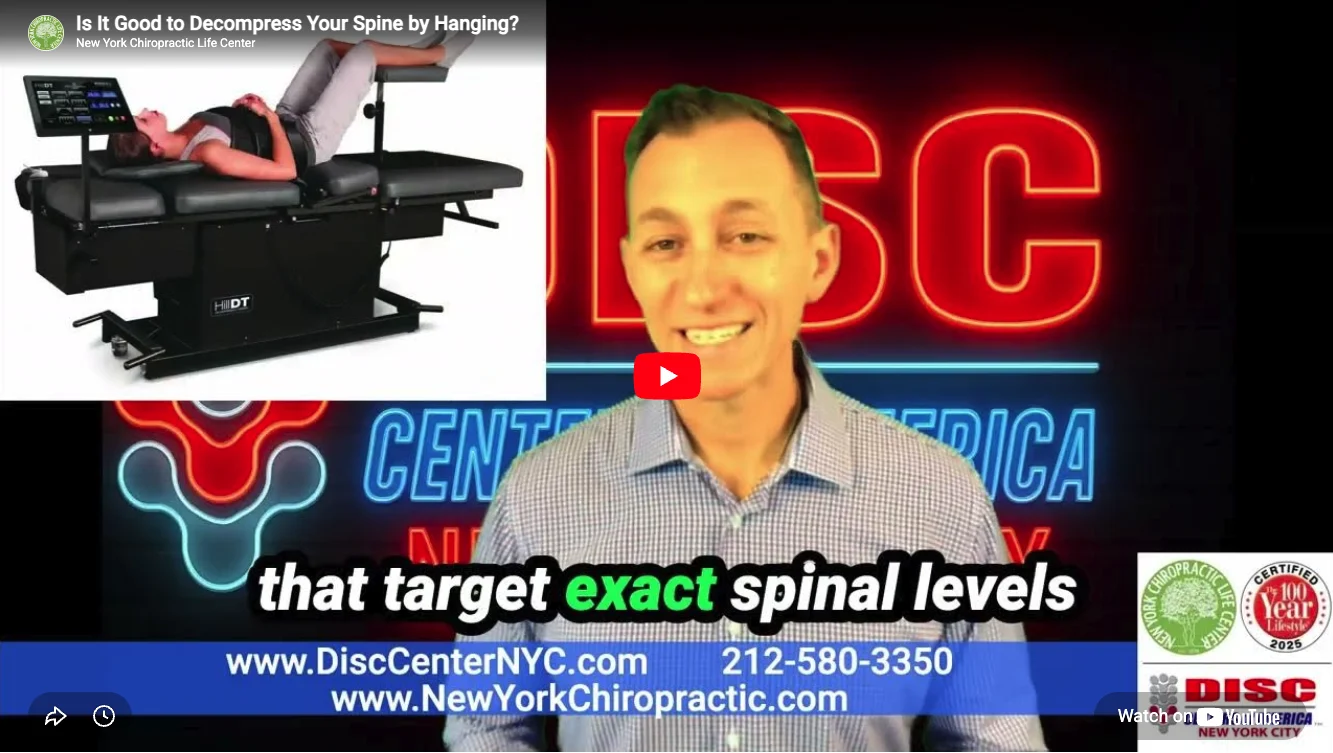
Professional spinal decompression is different because it is designed to be more controlled and targeted based on the patient’s condition.
That does not make hanging bad.
It just means hanging has a role, but it also has limits.
Full Hanging vs. Supported Hanging
There are two main ways people hang.
A full hang means your feet are off the ground and your full body weight is pulling through your arms and shoulders.
A supported hang means your hands are on a bar, but your feet remain lightly on the floor or on a step. This allows you to control how much weight is being used.
For many people, supported hanging is the better starting point.
It is gentler.
It is easier to control.
It places less stress on the shoulders.
It allows you to stop quickly if symptoms increase.
If you are new to hanging, start with supported hanging.
Keep your feet on the ground.
Let your knees bend slightly.
Relax your shoulders without forcing them.
Breathe slowly.
Hold for 10 to 20 seconds.
Step out gently.
Do not swing.
Do not aggressively pull.
Do not push through pain.
Who Should Be Careful with Hanging?
Hanging is not appropriate for everyone.
You should be careful or avoid hanging if you have shoulder instability, rotator cuff injuries, severe neck pain, severe back pain, active sciatica, numbness, tingling, weakness, dizziness, balance problems, uncontrolled high blood pressure, glaucoma, recent surgery, spinal instability, or significant disc symptoms.
If hanging increases pain, sends symptoms down your arm or leg, causes numbness or tingling, creates dizziness, or makes you feel worse afterward, stop.
Your body is giving you information.
A healthy decompression exercise should not create sharp pain or worsening nerve symptoms.
If you are unsure, get evaluated before adding hanging into your routine.
Hanging and Sciatica
Many people with sciatica wonder if hanging will help.
Sometimes it may provide temporary relief.
If the spine feels compressed and hanging gently reduces pressure, the person may feel better for a short period.
But sciatica is often related to nerve irritation.
That nerve irritation may come from a herniated disc, inflammation, joint dysfunction, spinal stenosis, or another cause.
If the sciatic nerve is already irritated, hanging may or may not help. Some people feel relief. Others feel worse.
That is why sciatica should not be managed by guessing.
If you have pain traveling down the leg, numbness, tingling, burning pain, or weakness, it is time to get evaluated.
Hanging and Herniated Discs
Hanging may feel helpful for some people with disc pressure, but it is not precise.
A herniated disc can be sensitive to position, angle, inflammation, and nerve involvement.
Because hanging uses body weight and general traction, it may not apply the right force or direction for your specific disc issue.
For some people, that may be fine.
For others, it may irritate the disc or nerve.
This is why a professional evaluation matters if you have a known herniated disc, bulging disc, or degenerative disc disease.
The goal is not just decompression.
The goal is the right kind of decompression for the right condition.
What to Do Along with Hanging
If hanging feels good and you are a good candidate, use it as one piece of a larger spinal health routine.
Do not rely on it as your only strategy.
Support your spine with walking, hydration, posture breaks, gentle mobility exercises, diaphragmatic breathing, better sleep positioning, and chiropractic care when appropriate.
Helpful mobility exercises may include cat-cow, child’s pose, thoracic extensions, pelvic tilts, and open-book rotations.
These help your spine move in different ways, not just through traction.
Walking is especially important because it supports circulation, spinal rhythm, and healthy motion.
Hydration supports the discs, muscles, and fascia.
Better posture reduces the compression you create throughout the day.
Hanging may help create temporary relief, but your daily habits help determine whether that relief lasts.
Professional Evaluation Matters
If your spine feels compressed once in a while after sitting too long, hanging may be a helpful reset.
But if you constantly feel compressed, stiff, blocked, or painful, there may be a deeper issue.
You should be evaluated if you have back pain lasting more than a few weeks, neck pain, sciatica, numbness, tingling, weakness, pain traveling into the arms or legs, pain that worsens with sitting, recurring flare-ups, or a known disc problem.
At New York Chiropractic Life Center, we evaluate posture, spinal motion, nerve signs, lifestyle habits, and the pattern of your symptoms.
The goal is to understand why your spine feels compressed and what type of care makes sense.
For some patients, chiropractic care, posture coaching, and home mobility may be enough.
For others, more specific non-surgical spinal decompression may be appropriate.
Final Thoughts
So, is it good to decompress your spine by hanging?
For the right person, yes.
Hanging can be a helpful natural spinal decompression tool. It may reduce the feeling of pressure, stretch tight muscles, open the upper back, and help you feel looser and more upright.
But hanging is not right for everyone.
It is also not a complete solution for disc injuries, sciatica, nerve symptoms, or chronic spinal problems.
If you use hanging, start gently. Consider supported hanging before full hanging. Avoid swinging, forcing, or pushing through pain.
And if your symptoms include numbness, tingling, weakness, sciatica, or pain that keeps returning, do not guess.
At New York Chiropractic Life Center, Drs. Jay and Josh Handt, DC help New Yorkers understand the cause of their spinal pressure and explore natural, non-surgical options for better spinal and nervous system health.
Call 212-580-3350 or visit www.NewYorkChiropractic.com to schedule your consultation.
FAQ Section
Is hanging good for your spine?
Hanging can be good for some people because it may gently reduce spinal compression and stretch tight muscles. However, it is not right for everyone, especially people with nerve symptoms, severe pain, or shoulder problems.
How long should I hang to decompress my spine?
Start with 10 to 20 seconds using a supported hang with your feet lightly on the floor. Do not force it, swing, or push through pain.
Can hanging help sciatica?
Hanging may provide temporary relief for some people with sciatica, but it can also irritate symptoms in others. Sciatica should be evaluated to determine the cause.
Is supported hanging better than full hanging?
For many people, yes. Supported hanging allows more control and places less stress on the shoulders and spine.
When should I avoid hanging?
Avoid hanging if you have severe back or neck pain, worsening sciatica, numbness, tingling, weakness, shoulder instability, dizziness, recent surgery, or if hanging increases your symptoms.